



Would you like to visit a popular resort in the sunny south of Lanzarote? Playa Blanca has much to offer holidaymakers who want to combine staying in a luxury hotel located in a vibrant area with lovely beaches and a charming atmosphere.
Once a small fishing village, the island’s third largest resort has gained a reputation as one of the premium places in Lanzarote, welcoming sun-seeking guests throughout every year.
On top of Lanzarote’s natural appealing climate, this seaside town is home to a leading 5-star hotel which comes highly recommended by the travel experts Discount Rent A Car, Lda). The Princesa Yaiza Suite Hotel Resort is a great place to stay with top class facilities, an unrivalled personal service and guestrooms with an air of luxury. All this and more is set in lovely surroundings with breathtaking beachfront views. And we know you are going to be impressed with the fantastic unbeatable prices on offer!
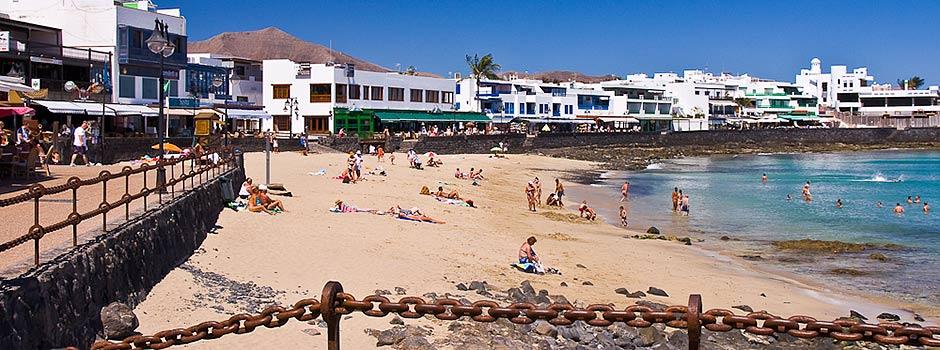
Several beautiful, calm beaches have made this resort very popular with families. One of the best in Playa Blanca is its main central beach of the same name, located at the end of the harbour. This pleasant, sheltered beach has golden sand, clear waters and provides fabulous views over northern Fuerteventura and the Islet of Lobos, only separated by 7 miles (11 kilometres) from Lanzarote. Playa Dorada is situated to the east, is extensive and its facilities include restaurants, snack bars, shops and all kinds of leisure and water sports activities. Further west is the sheltered Playa Flamingo which is surrounded by subtropical gardens. A beautiful promenade lined with restaurants, bars and shops links all three beaches.
But there are still more options for beaches in the near surroundings of Playa Blanca. If you continue along the promenade eastwards you will eventually arrive at the Castillo de las Coloradas, an old watchtower. The coast between here and Punta del Papagayo – the southernmost point of the island – is a chain of idyllic coves and gorgeous beaches featuring fine pale golden sand and warm, crystal clear water, which can be reached by car or boat. These areas are a little more off-the-beaten track and you may want to rent a car so you can explore them with ease. Check out the great deals available with Discount Rent A Car. They also are not as developed as the previously mentioned beaches, so it might be an idea to take a picnic along with you. And please, don’t forget the suncream!
Playa Blanca is a great holiday hotspot with warm weather all year round, fantastic facilities and a chance for you to really relax and enjoy yourself. What are you waiting for?


